2026 Stacked Modern New Year Design Review
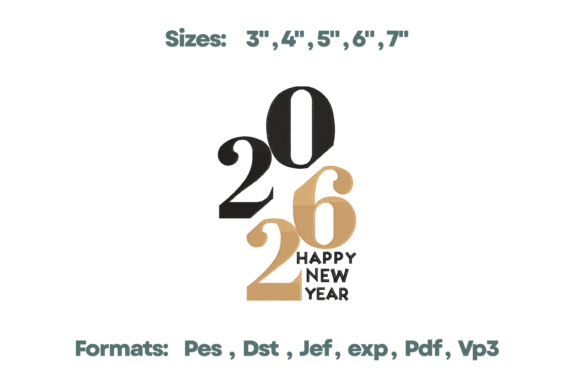
As an embroidery designer preparing for the upcoming winter craft fair season, I am constantly evaluating which digital assets will translate into profitable finished products. When reviewing the 2026 Stacked Modern New Year Design, my immediate focus is on its commercial viability for handmade sellers and boutique makers. This machine embroidery design features a sophisticated vertical arrangement of the year, with the top "20" rendered in solid black. From a production standpoint, this stacked layout is a strategic choice for vendors selling tote bags, aprons, and home decor. Unlike wide horizontal date formats that can get lost on narrow items or compete with seams, this vertical orientation maximizes hoop space and creates a bold, modern focal point that reads clearly from a distance across a crowded market table.
First Impressions and Booth Display Strategy
The first impression of the 2026 Stacked Modern New Year Design is undeniably contemporary and graphic. It avoids the cluttered, overly ornate aesthetic often associated with holiday embroidery, leaning instead into a clean, typographic style that appeals to modern buyers. For an Etsy seller or small shop product line, this minimalism is a strength. The solid black upper section provides high contrast, ensuring legibility even when viewed quickly by passing customers. In a booth display, this design acts as an anchor piece. Because it feels premium rather than kitschy, it elevates the perceived value of surrounding items. I envision this design serving as the centerpiece of a "New Year Refresh" collection, bridging the gap between festive winter merchandise and practical, year-round organization tools.
When setting up a table display, visual hierarchy is essential. This design’s vertical nature allows it to fit perfectly on the front panel of a canvas tote bag or the bib of a linen apron without distortion. Customers looking for handmade gifts often gravitate toward items that look intentional and professionally executed. The stacked format mimics high-end retail branding, making your embroidered patch or tea towel embroidery feel like a curated boutique item rather than a generic craft project. This distinction is vital for justifying higher price points at craft fairs where competition is fierce.
Product Applications and Commercial Viability
Evaluating where this embroidery file performs best requires understanding fabric texture and end-use. Based on the design's description and structure, here is how I would prioritize production for commercial embroidery:
- Tote Bags and Market Shoppers: This is the primary application. The vertical stack utilizes the natural portrait orientation of a bag panel. The solid black "20" offers excellent coverage on natural canvas, while the lower digits can be customized in accent thread colors to match specific bag linings or hardware.
- Kitchen Textiles: Tea towel embroidery benefits greatly from this layout. Flour sack towels are often taller than they are wide; a horizontal date would require excessive negative space. The 2026 Stacked Modern New Year Design fills the vertical center beautifully, creating a balanced composition that looks intentional on hanging racks.
- Aprons: For apron embroidery, placement is key. The stacked design fits neatly above the waistline or centered on a full-length bib. It avoids the bulkiness of large circular wreaths, making the garment more comfortable to wear and easier to fold for packaging.
- Pillow Covers: As a home decor accent, this design works well on lumbar pillows. The verticality complements the rectangular shape, offering a modern alternative to traditional seasonal throw pillows.
For digital sellers offering printable mockups, this design is exceptionally photogenic. The high-contrast elements photograph sharply, reducing the need for extensive editing. When listing on platforms like Etsy, clear photography drives sales. A crisp image of this design on a textured linen background communicates quality instantly. Furthermore, because the design is typographic rather than illustrative, it is highly repeatable for batch production. You can hoop multiple items or run consecutive jobs without changing thread colors frequently, streamlining your workflow during the busy winter rush.
Technical Considerations for Production Success
While the aesthetic is strong, practical execution determines profitability. As with any machine embroidery design, you must verify specific technical details before committing to bulk production. Always check the included stitch count, recommended hoop size, and licensing terms provided with the digital embroidery file. Assuming standard parameters for a design of this visual weight, there are several critical factors to monitor.
Stitch Density and Fabric Compatibility
The mention of "solid black" for the top portion suggests a fill stitch area. Solid fills can be dense. If you are stitching on lightweight fabrics or loose-weave tea towels, excessive stitch density can cause puckering or fabric distortion. Always test the design on scrap fabric identical to your finished product. Use an appropriate stabilizer; a cut-away stabilizer is generally safer for tote bags and stretchy materials to maintain registration, while a tear-away may suffice for tightly woven linens. If the design includes satin stitch borders around the numbers, ensure your tension is balanced to prevent tunneling, especially on thicker canvas materials.
Legibility and Sizing Limits
Stacked typography relies on precise spacing. Before resizing this embroidery file, understand that reducing the overall dimensions too much can cause the individual numbers to merge or become illegible. Small lettering or thin connecting lines may disappear on textured fabrics like terry cloth or slub linen. If you plan to create smaller variations for patches or pouches, verify that the minimum height maintains clarity. Conversely, enlarging the design significantly may result in sparse coverage if the original digitizing did not account for scaling. Always run a sew-out at your intended final size to confirm that the visual balance remains intact.
Thread Contrast and Color Planning
The design specifies solid black for the top section, but the lower portion offers creative flexibility. For craft fair products, consider offering colorways that coordinate with current interior design trends. Muted sages, warm terracottas, or classic navys can make the design feel fresh and relevant beyond January 1st. However, ensure sufficient contrast against your base fabric. Dark thread on dark fabric loses impact in dimly lit convention centers. If using dark backgrounds, verify if the design includes an underlay or outline that enhances visibility. Thread colors should be lightfast and washable, especially for kitchen and apparel items that will see frequent use.
Maximizing Value for Handmade Businesses
Ultimately, the 2026 Stacked Modern New Year Design is a versatile asset for creative entrepreneurs. Its strength lies in its adaptability across multiple product categories while maintaining a cohesive brand identity. For boutique makers, consistency builds recognition. Using this single design across tote bags, aprons, and pillows creates a collectible series that encourages multi-item purchases. The modern aesthetic also broadens your demographic reach, appealing to younger buyers who appreciate minimalist design alongside traditional craft fair patrons.
From a business perspective, this design supports efficient inventory management. Because it is non-directional and vertically oriented, it simplifies hooping and alignment compared to complex scenic designs. This efficiency translates directly to margin protection. Additionally, the timeless nature of block typography means unsold inventory does not immediately become obsolete; it retains relevance throughout the entire year as a marker of time, unlike character-based or trend-specific motifs.
Before launching this collection, create at least one real physical sample for every product type you intend to sell. Digital mockups are useful for listings, but tactile verification is non-negotiable for quality assurance. Inspect the back of the embroidery for jump stitches and trim cleanliness. Confirm that the design assets you purchased include commercial rights for finished products if you are selling physically. By combining the strong visual appeal of the 2026 Stacked Modern New Year Design with rigorous production standards, you position your handmade business for a successful and profitable new year. Remember to document your settings and successful fabric pairings; this knowledge becomes a valuable reference for future seasonal collections, ensuring your booth remains a destination for quality embroidery year after year.